Introduction: The Great Greenhouse Material Debate
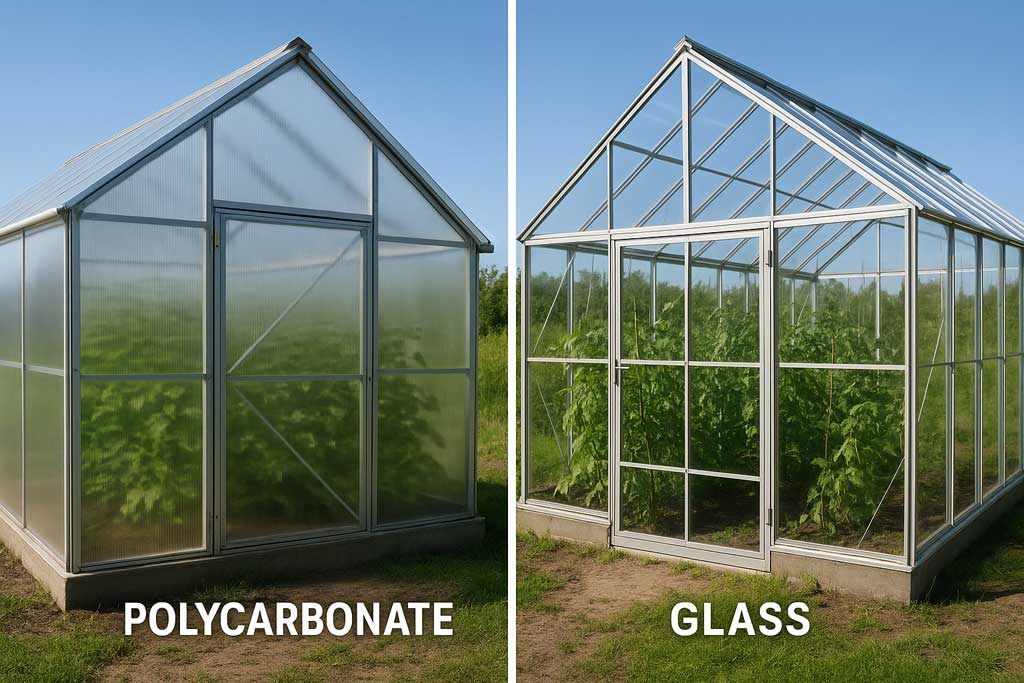
Choosing the right glazing material for your greenhouse is one of the most important decisions you’ll make as a grower. Both polycarbonate and glass offer distinct advantages, and understanding these differences will help you make the best choice for your specific growing needs, climate, and budget.
This comprehensive comparison examines every aspect of both materials, from initial costs to long-term performance, helping you make an informed decision that you’ll be satisfied with for years to come.
Material Overview and Composition
Polycarbonate Greenhouse Panels
Polycarbonate is a thermoplastic polymer known for its exceptional strength and versatility. In greenhouse applications, it’s typically manufactured as twin-wall or triple-wall panels with hollow chambers that provide excellent insulation properties.
Polycarbonate Structure Types:
- Single Wall (4mm): Basic protection, limited insulation
- Twin Wall (6mm-16mm): Optimal balance of insulation and light transmission
- Triple Wall (16mm-25mm): Maximum insulation for cold climates
- Honeycomb (32mm): Highest insulation values available
Glass Greenhouse Panels
Traditional greenhouse glass is typically horticultural grade, designed specifically for growing applications. Modern options include tempered glass for safety and double-glazed units for improved insulation.
Glass Types for Greenhouses:
- Horticultural Glass (3mm): Standard single-pane option
- Tempered Glass (4mm): Safety glass that shatters into small pieces
- Double Glazed: Two panes with air gap for insulation
- Low-E Coated: Special coating for improved thermal performance
Insulation and Energy Efficiency Comparison
Energy efficiency directly impacts both growing success and operational costs. The insulation properties of your greenhouse glazing determine heating requirements, temperature stability, and overall energy consumption.
Thermal Performance Data
R-Values (Higher = Better Insulation)
- Single Glass (3mm): R-0.95
- Double Glazed Glass: R-2.0
- 6mm Twin-Wall Polycarbonate: R-1.54
- 8mm Twin-Wall Polycarbonate: R-1.89
- 16mm Triple-Wall Polycarbonate: R-2.77
- 25mm Polycarbonate: R-3.85
Heat Retention Analysis
Polycarbonate’s cellular structure creates multiple air barriers that significantly reduce heat transfer. This superior insulation means lower heating costs and more stable growing temperatures, especially during cold weather.
Energy Savings Potential:
- 6mm Twin-Wall Polycarbonate: 30-40% energy savings vs. single glass
- 16mm Triple-Wall Polycarbonate: 50-60% energy savings vs. single glass
- 25mm Polycarbonate: 65-75% energy savings vs. single glass
Light Transmission and Quality
Light is essential for plant photosynthesis, making transmission rates and light quality critical factors in greenhouse material selection. Both materials offer excellent light transmission, but with different characteristics.
Light Transmission Rates
Visible Light Transmission (Higher = More Light)
- Clear Glass: 90-92% transmission
- Clear Polycarbonate (6mm): 83-87% transmission
- Clear Polycarbonate (16mm): 77-82% transmission
- Opal Polycarbonate: 75-80% transmission (diffused)
Light Quality and Distribution
Glass advantages: Provides crystal-clear visibility and direct light transmission, ideal for viewing plants and precise color perception.
Polycarbonate advantages: Creates diffused light that eliminates hot spots and shadows, providing more even light distribution throughout the growing space.
Diffused Light Benefits:
- Reduces plant stress from intense direct sunlight
- Eliminates shadows between plants
- Improves light penetration to lower leaves
- Reduces temperature fluctuations
Durability and Longevity Assessment
The lifespan and durability of your greenhouse glazing affect both long-term costs and maintenance requirements. Understanding how each material performs over time is crucial for making a cost-effective choice.
Impact Resistance and Safety
Polycarbonate offers exceptional impact resistance, making it virtually unbreakable under normal conditions. This translates to fewer replacements, reduced maintenance, and improved safety.
Impact Resistance Comparison:
- Polycarbonate: 200x stronger than glass
- Tempered Glass: 4-5x stronger than regular glass
- Regular Glass: Baseline comparison
Weather Resistance
Both materials handle normal weather conditions well, but their responses to extreme conditions differ significantly.
Hail Resistance:
- Polycarbonate: Excellent – resists impact damage from hail up to 1.5 inches
- Tempered Glass: Good – better than regular glass but can still break
- Regular Glass: Poor – easily damaged by hail
Warranty and Expected Lifespan
Typical Warranty Periods:
- Quality Polycarbonate: 10-15 year warranty, 20+ year lifespan
- Tempered Glass: 5-10 year warranty, 15-20 year lifespan
- Regular Glass: Limited warranty, variable lifespan due to breakage risk
Installation and Maintenance Requirements
The ease of installation and ongoing maintenance requirements significantly impact the total cost of ownership for your greenhouse glazing material.
Installation Considerations
Polycarbonate Installation:
- Weight: Lightweight – easy to handle and install
- Flexibility: Can be cut on-site with standard tools
- Sealing: Requires proper edge sealing to prevent moisture infiltration
- Expansion: Must accommodate thermal expansion and contraction
Glass Installation:
- Weight: Heavy – requires careful handling and stronger framing
- Precision: Must be precisely measured and cut
- Safety: Requires safety equipment and experience
- Glazing: Needs proper glazing compound and regular maintenance
Ongoing Maintenance Requirements
Understanding maintenance needs helps you plan for long-term ownership costs and ensure optimal performance throughout the material’s lifespan.
Polycarbonate Maintenance:
- Cleaning: Gentle washing with mild soap and water
- Edge Sealing: Periodic inspection and resealing if needed
- UV Protection: Quality panels include UV coating that doesn’t require maintenance
- Algae Prevention: Occasional treatment to prevent algae growth in channels
Glass Maintenance:
- Cleaning: Regular washing for optimal light transmission
- Glazing Compound: Annual inspection and periodic replacement
- Crack Monitoring: Regular inspection for stress cracks
- Replacement: Individual pane replacement when broken
Cost Analysis: Initial Investment vs. Long-term Value
Making a cost-effective choice requires considering both upfront costs and long-term expenses including energy, maintenance, and replacement costs.
Initial Cost Comparison
Typical Material Costs (per square foot):
- 6mm Twin-Wall Polycarbonate: $2.50-$3.50
- 8mm Twin-Wall Polycarbonate: $3.00-$4.00
- 16mm Triple-Wall Polycarbonate: $4.50-$6.00
- Horticultural Glass (3mm): $2.00-$3.00
- Tempered Glass (4mm): $3.50-$5.00
- Double Glazed Glass: $6.00-$8.00
Total Cost of Ownership
When evaluating costs, consider the complete picture including energy savings, maintenance expenses, and replacement costs over the material’s lifespan.
10-Year Cost Projection (200 sq ft greenhouse):
6mm Twin-Wall Polycarbonate:
- Initial Cost: $600-$700
- Energy Savings: $2,000-$3,000
- Maintenance: $200-$300
- Replacement: $0
- Net 10-Year Cost: -$1,200 to -$2,000 (savings)
Single Glass:
- Initial Cost: $400-$600
- Energy Costs: $0 (baseline)
- Maintenance: $500-$800
- Replacement: $600-$1,200
- Net 10-Year Cost: $1,500-$2,600
Climate Considerations and Regional Factors
Your local climate significantly influences which material will perform best for your specific growing situation.
Cold Climate Performance
In regions with harsh winters, insulation becomes critically important for both plant survival and heating costs.
Best Choices for Cold Climates:
- Excellent: 16mm+ Triple-Wall Polycarbonate
- Good: 8mm Twin-Wall Polycarbonate
- Adequate: Double Glazed Glass
- Poor: Single Glass
Hot Climate Considerations
In extremely hot climates, light control and heat management become primary concerns.
Hot Climate Strategies:
- Polycarbonate: Opal or bronze tinted for heat reduction
- Glass: Clear with external shading systems
- Both: Excellent ventilation systems essential
High Wind and Storm Areas
Regions prone to severe weather require materials that can withstand extreme conditions.
Storm Resistance Ranking:
- Polycarbonate: Excellent impact resistance, flexible
- Tempered Glass: Good strength, safer failure mode
- Regular Glass: Poor – high breakage risk
Environmental Impact and Sustainability
Environmental considerations are increasingly important in material selection decisions.
Manufacturing and Production Impact
Polycarbonate: Petroleum-based product with moderate production energy requirements. Fully recyclable at end of life.
Glass: Made from abundant natural materials (sand, soda ash, limestone) with high production energy requirements due to melting temperatures.
Lifecycle Environmental Assessment
Energy Efficiency Benefits:
- Polycarbonate’s superior insulation reduces lifetime heating energy by 30-60%
- Lower energy consumption translates to reduced carbon footprint
- Energy savings often offset higher production impact within 2-3 years
Making Your Decision: Key Factors to Consider
Choosing between polycarbonate and glass depends on your specific priorities, growing goals, and local conditions.
Choose Polycarbonate If:
- Energy efficiency and heating costs are primary concerns
- You live in a cold climate or experience harsh weather
- Safety and impact resistance are important
- You prefer lower maintenance requirements
- Long-term cost savings outweigh higher initial investment
Choose Glass If:
- Maximum light transmission is critical for your crops
- You prefer the traditional greenhouse appearance
- Initial cost is the primary consideration
- You have experience with glass greenhouse maintenance
- Crystal-clear visibility is important for your application
Conclusion: The Best Choice for Most Growers
For the majority of greenhouse applications, polycarbonate offers the best combination of performance, efficiency, and value. Its superior insulation properties, excellent durability, and lower maintenance requirements make it an excellent investment for serious growers.
However, the “best” choice ultimately depends on your specific situation. Consider your climate, budget, growing goals, and personal preferences when making this important decision. Both materials can provide excellent growing environments when properly installed and maintained.
Remember that your greenhouse glazing is a long-term investment. Taking time to carefully evaluate your options and choose the right material will pay dividends in growing success and satisfaction for many years to come.
 English
  Spanish
  French
  German
  Portuguese
  Arabic
  Russian
  Chinese