Awakening Your Greenhouse for the Growing Season
Spring preparation marks the transition from winter survival mode to active growing season, requiring systematic evaluation and preparation of all greenhouse systems. This critical period sets the foundation for successful growing throughout the coming year.
Proper spring preparation involves more than simply turning up the heat and planting seeds. It requires comprehensive assessment of winter damage, system optimization, and strategic planning for the increased demands of active growing season.
Post-Winter Damage Assessment
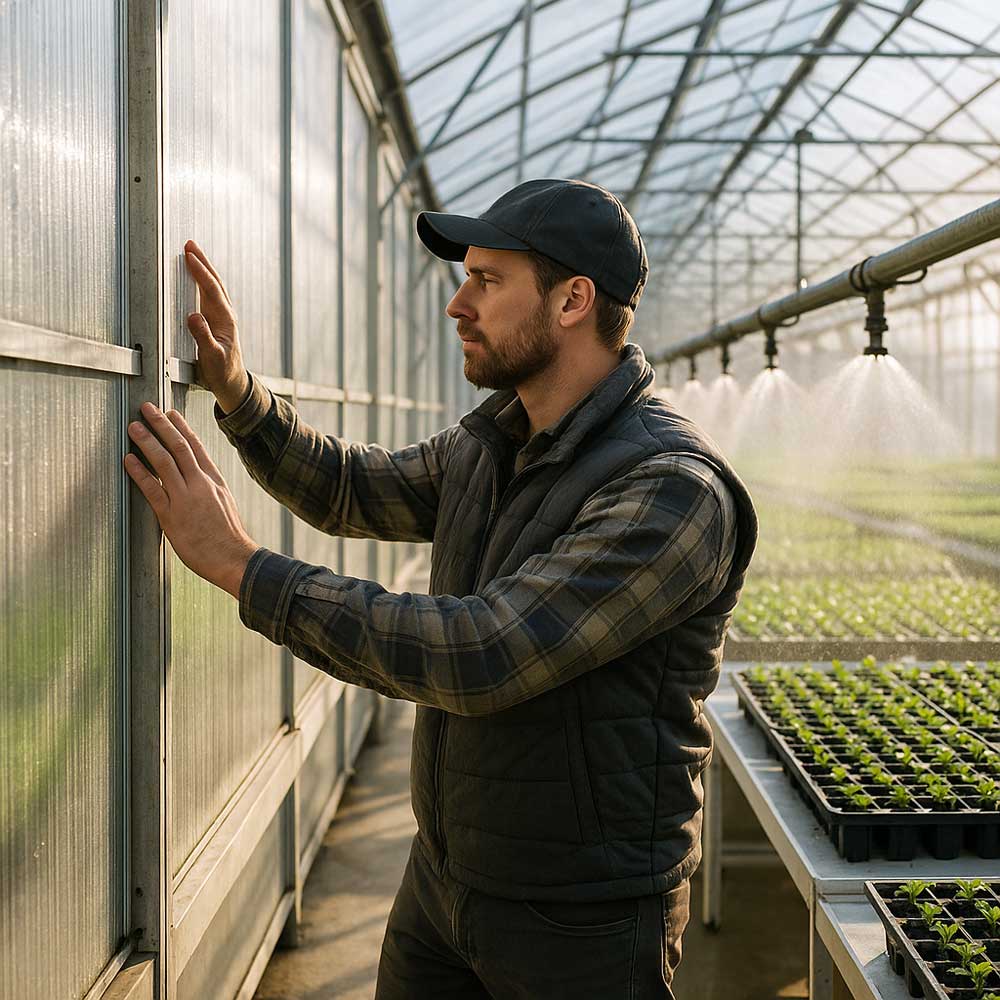
Winter weather can cause significant stress to greenhouse structures and systems. A thorough inspection identifies issues that could compromise growing operations if left unaddressed.
Structural Inspection Checklist:
- Polycarbonate Panel Condition: Check for cracks, loose panels, or damaged sealing
- Frame Integrity: Inspect all connections, bolts, and structural members
- Foundation Stability: Look for settling, cracks, or water damage
- Door and Vent Operation: Test all moving parts for smooth operation
- Glazing Seal Condition: Verify weatherstripping and gasket integrity
System Restoration and Optimization
Spring system startup requires careful attention to all mechanical and electrical components that may have been dormant or operating at reduced capacity during winter months.
Heating System Transition
As heating demands decrease with warming weather, this is the ideal time to perform maintenance and prepare systems for variable spring weather conditions.
Heating System Spring Tasks:
- Combustion System Cleaning: Remove soot and debris from heat exchangers
- Burner Adjustment: Optimize combustion efficiency for variable loads
- Control Calibration: Verify thermostat accuracy and deadband settings
- Fuel System Maintenance: Check filters, valves, and supply lines
- Safety System Testing: Test all safety controls and alarms
Ventilation System Preparation
Spring weather brings increased ventilation needs as temperatures rise and plants become more active. Proper ventilation system preparation ensures adequate air exchange and temperature control.
Ventilation Optimization:
- Vent Mechanism Lubrication: Service all automatic vent openers and motors
- Screen and Filter Cleaning: Remove accumulated debris and replace filters
- Fan Motor Maintenance: Lubricate bearings and check electrical connections
- Control System Calibration: Adjust temperature and humidity setpoints
- Emergency Ventilation Testing: Verify backup ventilation systems
Irrigation System Startup
Irrigation systems require careful startup procedures to ensure reliable operation throughout the growing season. Spring is the ideal time to expand or modify irrigation systems for new crops.
Water System Restoration
Water systems that have been dormant or operating at reduced capacity during winter require systematic startup to prevent damage and ensure reliable operation.
Irrigation System Startup Procedure:
- Gradual Pressure Restoration: Slowly bring systems up to operating pressure
- Leak Detection and Repair: Identify and fix winter freeze damage
- Filter Replacement: Install new filters and clean existing filtration systems
- Emitter Inspection: Check all drippers, sprayers, and distribution points
- Timer Programming: Adjust schedules for increasing plant needs
Fertigation System Preparation
Nutrient delivery systems require special attention to ensure accurate mixing and distribution of fertilizers as plant feeding programs intensify.
Fertigation System Tasks:
- Injector Calibration: Verify accurate nutrient dosing rates
- pH and EC Sensor Maintenance: Clean and calibrate monitoring equipment
- Stock Solution Preparation: Mix fresh nutrient concentrates
- Backflow Prevention Testing: Ensure water supply protection
- System Flushing: Remove accumulated salts and debris
Growing Media and Soil Preparation
Spring preparation includes evaluation and preparation of growing media, whether soil-based systems, soilless media, or hydroponic substrates.
Soil-Based System Preparation
Greenhouse soil requires annual evaluation and amendment to maintain optimal growing conditions and prevent pathogen buildup.
Soil Preparation Activities:
- Soil Testing: Analyze pH, nutrient levels, and organic matter content
- Amendment Addition: Incorporate compost, lime, or other soil improvers
- Cultivation and Aeration: Break up compacted soil and improve drainage
- Pathogen Management: Solarization or biological treatment if needed
- Bed Preparation: Level and shape growing beds for optimal drainage
Soilless Media Management
Container and hydroponic systems require evaluation of growing media condition and replacement of worn or contaminated substrates.
Media Evaluation Criteria:
- Physical Condition: Check for breakdown, compaction, or contamination
- Drainage Characteristics: Ensure adequate water infiltration and drainage
- pH and EC Levels: Test for salt accumulation and pH drift
- Pathogen Presence: Inspect for root rot or other disease organisms
- Replacement Planning: Schedule media replacement for optimal growing conditions
Pest and Disease Prevention
Spring preparation includes implementation of integrated pest management strategies to prevent problems before they become established in the warming greenhouse environment.
Sanitation and Hygiene
Thorough greenhouse sanitation eliminates overwintering pests and disease organisms that could cause problems during the growing season.
Sanitation Protocol:
- Complete Cleanout: Remove all plant debris and dead material
- Surface Disinfection: Clean and disinfect all surfaces with appropriate sanitizers
- Tool and Equipment Cleaning: Sanitize all growing equipment and tools
- Weed Removal: Eliminate weeds that harbor pests and diseases
- Perimeter Management: Clear vegetation around greenhouse exterior
Beneficial Organism Introduction
Spring is the ideal time to establish beneficial insect populations and biological control agents before pest populations become established.
Biological Control Strategies:
- Predatory Mite Release: Establish spider mite control populations
- Parasitic Wasp Introduction: Release aphid and whitefly control agents
- Beneficial Bacteria Application: Inoculate growing media with disease-suppressive organisms
- Monitoring System Setup: Install sticky traps and monitoring protocols
Crop Planning and Scheduling
Spring preparation includes detailed planning of crop rotations, planting schedules, and production goals for the coming growing season.
Production Planning
Effective production planning maximizes greenhouse utilization while ensuring optimal growing conditions for each crop throughout the season.
Planning Considerations:
- Crop Selection: Choose varieties suited to greenhouse conditions and market demands
- Succession Planting: Schedule multiple plantings for continuous harvest
- Space Allocation: Optimize greenhouse layout for maximum productivity
- Resource Requirements: Plan fertilizer, water, and labor needs
- Market Timing: Coordinate harvest timing with market opportunities
Seed and Transplant Preparation
Spring planting success depends on proper seed handling, storage, and transplant production techniques that ensure healthy plant establishment.
Seed Starting Best Practices:
- Seed Viability Testing: Test germination rates of stored seeds
- Starting Mix Preparation: Prepare sterile, well-draining seed starting media
- Environmental Control: Maintain optimal temperature and humidity for germination
- Lighting Management: Provide adequate light for strong seedling development
- Transplant Timing: Schedule transplanting for optimal plant development
Equipment Maintenance and Upgrades
Spring provides an opportunity to perform major equipment maintenance and implement system upgrades before the busy growing season begins.
Mechanical System Maintenance
All mechanical systems benefit from comprehensive maintenance during the transition from winter to spring operations.
Equipment Maintenance Schedule:
- Motor and Drive Maintenance: Lubricate bearings and check belt tension
- Pump System Service: Inspect seals, impellers, and pressure switches
- Control System Updates: Update software and calibrate sensors
- Electrical System Inspection: Check connections and safety systems
- Backup System Testing: Verify emergency and backup system operation
Technology Upgrades and Improvements
Spring preparation often includes implementation of new technologies or system improvements that enhance growing capabilities and operational efficiency.
Common Upgrade Projects:
- Automation System Expansion: Add sensors and control capabilities
- Irrigation System Improvements: Install precision watering systems
- Environmental Control Upgrades: Improve heating, cooling, or ventilation
- Monitoring System Enhancement: Add data logging and remote access capabilities
Energy Efficiency Optimization
Spring preparation includes evaluation of energy usage patterns and implementation of efficiency improvements that reduce operational costs throughout the growing season.
Energy Audit and Assessment
Comprehensive energy audits identify opportunities for efficiency improvements and cost reductions in greenhouse operations.
Energy Assessment Areas:
- Heating System Efficiency: Evaluate combustion efficiency and heat distribution
- Insulation Performance: Assess thermal envelope and identify improvements
- Lighting Efficiency: Consider LED upgrades and control improvements
- Ventilation Optimization: Balance air exchange with energy conservation
- Equipment Operation: Optimize schedules and control strategies
Safety System Verification
Spring startup includes comprehensive testing of all safety systems to ensure protection of crops, equipment, and personnel throughout the growing season.
Safety System Testing
All safety systems require regular testing to ensure proper operation when needed. Spring preparation provides an ideal opportunity for comprehensive safety system evaluation.
Safety System Checklist:
- Fire Suppression Systems: Test all fire detection and suppression equipment
- Emergency Ventilation: Verify backup ventilation system operation
- Alarm Systems: Test all temperature, humidity, and equipment alarms
- Backup Power Systems: Test generators and battery backup systems
- Emergency Procedures: Review and update emergency response plans
Record Keeping and Documentation
Spring preparation includes establishment of record-keeping systems and documentation procedures that support effective management throughout the growing season.
Production Records Setup
Comprehensive record keeping supports decision-making, regulatory compliance, and continuous improvement of greenhouse operations.
Essential Records:
- Environmental Data: Temperature, humidity, and light level logs
- Irrigation Records: Water usage and nutrient application tracking
- Pest and Disease Monitoring: IPM scouting and treatment records
- Production Data: Planting dates, harvest yields, and quality metrics
- Maintenance Logs: Equipment service and repair documentation
Staff Training and Preparation
Spring preparation includes training and preparation of greenhouse staff for the increased demands and new procedures of the growing season.
Training Program Development
Well-trained staff are essential for successful greenhouse operations. Spring provides an opportunity to update training and introduce new procedures.
Training Topics:
- Safety Procedures: Review all safety protocols and emergency procedures
- Equipment Operation: Train on new equipment and updated procedures
- Crop Management: Update cultural practices and IPM protocols
- Quality Standards: Review harvest and handling procedures
- Record Keeping: Train on documentation requirements and procedures
Marketing and Sales Preparation
Spring preparation extends beyond physical systems to include marketing and sales preparation for the products that will be produced during the growing season.
Market Development
Successful greenhouse operations require well-developed markets for their products. Spring preparation includes market development and customer relationship management.
Marketing Activities:
- Customer Communication: Contact existing customers about spring availability
- Product Planning: Confirm customer requirements and delivery schedules
- Quality Specifications: Review and update quality standards with customers
- Pricing Strategy: Establish pricing for the coming growing season
- New Market Development: Identify and develop new sales opportunities
Spring greenhouse preparation represents a critical investment in the success of the entire growing season. Systematic preparation of all systems, comprehensive planning, and thorough staff training create the foundation for productive, profitable greenhouse operations. The time and effort invested in proper spring preparation pays dividends throughout the year in improved plant quality, reduced problems, and optimized resource utilization.
 English
  Spanish
  French
  German
  Portuguese
  Arabic
  Russian
  Chinese