Introduction to Greenhouse Hydroponics
Hydroponic growing in greenhouse environments represents the pinnacle of controlled agriculture, combining the protected environment of covered structures with the precision of soil-free cultivation. This powerful combination enables growers to achieve maximum yields while using minimal space and resources.
Greenhouse hydroponics eliminates many variables that affect outdoor and soil-based growing, allowing for precise control over nutrition, water delivery, and environmental conditions. The result is faster growth rates, higher yields, and consistent crop quality that commands premium market prices.
Advantages of Greenhouse Hydroponic Systems
The benefits of combining hydroponics with greenhouse growing extend far beyond simple yield increases, encompassing efficiency, sustainability, and operational advantages that transform agricultural production.
Key Benefits:
- Accelerated Growth: Plants grow 25-50% faster than soil-based systems
- Higher Yields: 3-10 times greater production per square foot
- Water Efficiency: 90% less water usage through recirculation
- Precise Nutrition: Exact nutrient delivery to plant roots
- Disease Reduction: Elimination of soil-borne pathogens
- Space Optimization: Vertical growing and intensive production
- Year-Round Production: Continuous harvests independent of seasons
Hydroponic System Types for Greenhouses
Different hydroponic systems offer varying levels of complexity, automation, and suitability for specific crops. Understanding the characteristics of each system type enables optimal selection for specific growing goals and operational requirements.
Deep Water Culture (DWC) Systems
Deep Water Culture systems suspend plant roots directly in oxygenated nutrient solutions, providing maximum nutrient and oxygen availability for rapid plant growth.
DWC System Components:
- Reservoir Tanks: Large containers holding nutrient solutions
- Net Pots: Support structures for plants and growing media
- Air Pumps: Oxygenation systems for root health
- Air Stones: Diffusion devices for dissolved oxygen
- Growing Media: Lightweight support materials like hydroton or rockwool
Ideal Crops for DWC:
- Leafy Greens: Lettuce, spinach, kale, and herbs
- Fast-Growing Vegetables: Bok choy, arugula, and microgreens
- Small Root Vegetables: Radishes and small carrots
Nutrient Film Technique (NFT) Systems
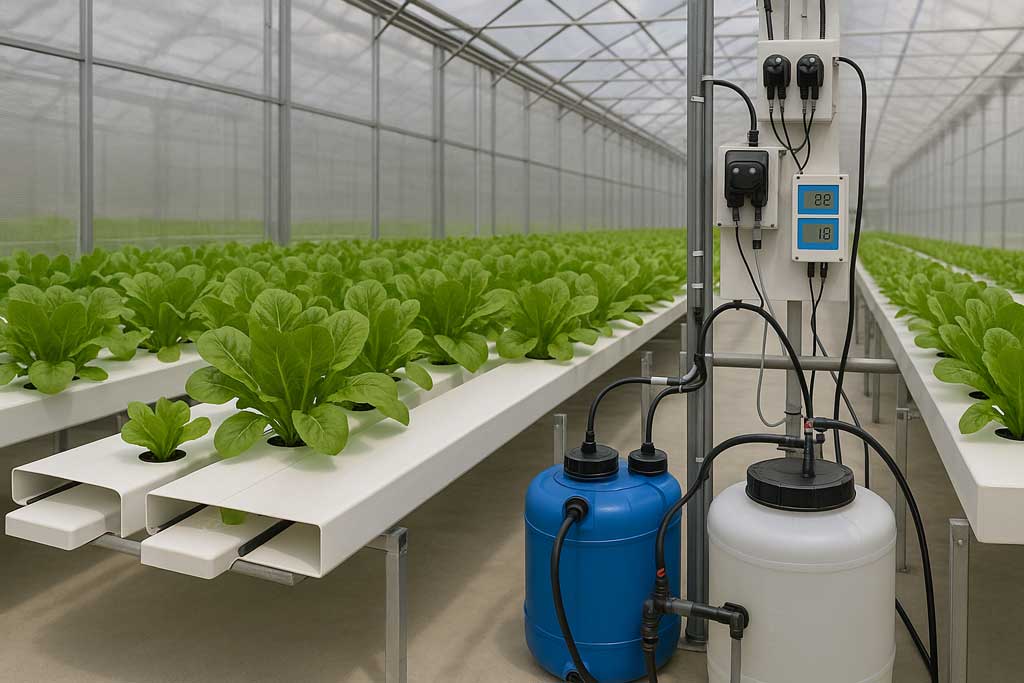
NFT systems circulate a thin film of nutrient solution along the bottom of growing channels, providing continuous nutrition while allowing excellent root oxygenation.
NFT System Design:
- Growing Channels: Sloped channels for continuous flow
- Nutrient Reservoir: Storage tank with circulation pump
- Distribution Manifold: Even flow distribution to all channels
- Collection System: Return flow collection and filtration
- Flow Control: Adjustable flow rates for optimal nutrition
NFT Advantages:
- Water Efficiency: Minimal water usage through recirculation
- Easy Harvesting: Simple plant removal and replacement
- Scalable Design: Easy expansion and modification
- Low Media Requirements: Minimal growing substrate needed
Ebb and Flow (Flood and Drain) Systems
Ebb and flow systems periodically flood growing beds with nutrient solution, then drain to allow root oxygenation between feeding cycles.
System Operation Cycle:
- Flood Phase: Growing beds filled with nutrient solution
- Saturation Period: Roots absorb nutrients for 15-30 minutes
- Drain Phase: Solution drains back to reservoir
- Oxygenation Period: Roots receive air between flood cycles
- Timer Control: Automated cycling based on plant needs
Ebb and Flow Benefits:
- Versatile Crop Suitability: Works well for many plant types
- Simple Operation: Reliable and easy to understand
- Root Zone Management: Excellent balance of nutrition and oxygenation
- Equipment Reliability: Fewer mechanical components to fail
Drip Irrigation Systems
Drip systems deliver precise amounts of nutrient solution directly to individual plants through emitters, providing controlled nutrition with minimal waste.
Drip System Components:
- Pressure-Compensating Emitters: Consistent flow rates regardless of pressure
- Distribution Tubing: Delivery network to individual plants
- Filtration Systems: Prevention of emitter clogging
- Pressure Regulation: Consistent system pressure maintenance
- Drainage Collection: Recovery of excess solution
Drip System Applications:
- Large Plant Production: Tomatoes, peppers, cucumbers
- Container Growing: Individual plant containers or bags
- Substrate Cultivation: Rockwool, coco coir, or perlite media
- Precision Feeding: Individual plant nutrition management
Growing Media Selection
The choice of growing media significantly impacts plant performance, system maintenance, and overall growing success. Different media offer varying characteristics for water retention, drainage, and root support.
Rockwool Growing Media
Rockwool provides excellent water retention and drainage characteristics, making it ideal for many hydroponic applications, particularly fruiting crops.
Rockwool Characteristics:
- Water Retention: Holds optimal moisture for root development
- Air Porosity: Excellent root oxygenation properties
- pH Stability: Inert material that doesn’t affect solution pH
- Sterile Medium: Free from pathogens and contaminants
- Reusable Options: Some grades can be sterilized and reused
Expanded Clay Pebbles (Hydroton)
Clay pebbles provide excellent drainage and reusability, making them popular for deep water culture and ebb and flow systems.
Clay Pebble Benefits:
- Excellent Drainage: Prevents waterlogged root conditions
- Reusable Material: Can be cleaned and reused multiple times
- pH Neutral: Doesn’t alter nutrient solution chemistry
- Root Support: Provides stable anchoring for plants
- Air Circulation: Promotes healthy root development
Coconut Coir Media
Coconut coir offers renewable, sustainable growing media with excellent water retention and cation exchange properties.
Coir Media Advantages:
- Sustainable Resource: Renewable waste product from coconut processing
- Water Retention: Excellent moisture-holding capacity
- Cation Exchange: Natural buffering of nutrient solutions
- Biological Activity: Supports beneficial microorganism growth
- Biodegradable: Environmentally friendly disposal
Nutrient Solution Management
Proper nutrient solution management forms the foundation of successful hydroponic growing, requiring understanding of plant nutrition, solution chemistry, and monitoring techniques.
Essential Plant Nutrients
Hydroponic nutrition must provide all essential elements in proper ratios and concentrations for optimal plant growth and development.
Macronutrients (Required in Large Quantities):
- Nitrogen (N): Vegetative growth and protein synthesis
- Phosphorus (P): Root development and flowering
- Potassium (K): Disease resistance and fruit quality
- Calcium (Ca): Cell wall strength and structure
- Magnesium (Mg): Chlorophyll formation and enzyme activation
- Sulfur (S): Protein synthesis and oil production
Micronutrients (Required in Small Quantities):
- Iron (Fe): Chlorophyll synthesis and electron transport
- Manganese (Mn): Photosynthesis and enzyme activation
- Zinc (Zn): Growth regulators and protein synthesis
- Boron (B): Cell wall formation and calcium utilization
- Copper (Cu): Enzyme systems and chlorophyll formation
- Molybdenum (Mo): Nitrogen fixation and nitrate reduction
Solution Monitoring and Adjustment
Regular monitoring and adjustment of nutrient solutions ensure optimal plant nutrition and prevent deficiencies or toxicities that can affect crop quality.
Critical Monitoring Parameters:
- Electrical Conductivity (EC): Total dissolved salt concentration
- pH Level: Nutrient availability and uptake efficiency
- Dissolved Oxygen: Root health and nutrient uptake
- Temperature: Solution temperature for optimal uptake
- Nutrient Ratios: Individual element concentrations
Optimal Ranges for Most Crops:
- EC Range: 1.2-2.4 mS/cm depending on crop and growth stage
- pH Range: 5.5-6.5 for optimal nutrient availability
- Dissolved Oxygen: 5-8 ppm for healthy root function
- Temperature: 65-75°F (18-24°C) for most crops
System Design and Installation
Proper system design and installation ensure reliable operation, easy maintenance, and optimal growing conditions throughout the crop cycle.
Layout Planning and Design
Effective hydroponic system layout maximizes growing space while providing access for maintenance and crop management activities.
Design Considerations:
- Workflow Optimization: Efficient paths for planting, maintenance, and harvesting
- Equipment Access: Easy reach to pumps, reservoirs, and controls
- Drainage Planning: Proper slope and collection for solution return
- Electrical Requirements: Power supply for pumps, lights, and controls
- Expansion Capability: Room for system growth and modification
Plumbing and Water Systems
Reliable plumbing systems ensure consistent nutrient delivery and prevent system failures that could damage crops.
Plumbing Best Practices:
- Food-Grade Materials: Safe materials for contact with nutrient solutions
- Proper Sizing: Adequate pipe diameter for required flow rates
- Slope Requirements: Gravity drainage back to reservoirs
- Filtration Systems: Prevention of clogs and system contamination
- Backup Systems: Redundancy for critical components
Environmental Control Integration
Hydroponic systems perform best when integrated with comprehensive environmental control systems that maintain optimal growing conditions.
Temperature Management
Both air and root zone temperatures significantly impact hydroponic plant performance and nutrient uptake efficiency.
Temperature Control Strategies:
- Root Zone Heating: Heating cables or mats for optimal root temperatures
- Solution Chilling: Cooling systems for summer temperature control
- Insulation Systems: Reservoir insulation to maintain stable temperatures
- Heat Recovery: Capture waste heat from equipment for heating
Humidity and Air Quality
Proper humidity management prevents disease development while maintaining optimal transpiration rates for nutrient uptake.
Humidity Control Methods:
- Ventilation Systems: Air exchange to remove excess moisture
- Dehumidification: Mechanical moisture removal during humid periods
- Air Circulation: Fans to prevent stagnant air conditions
- Canopy Management: Plant spacing for adequate air movement
Crop-Specific Growing Protocols
Different crops require specific hydroponic protocols optimized for their nutritional needs, growth patterns, and harvest requirements.
Leafy Green Production
Leafy greens represent ideal crops for hydroponic production, offering rapid growth, high yields, and excellent market value.
Lettuce Growing Protocol:
- Germination Phase: Rockwool cubes with low EC (0.8-1.0 mS/cm)
- Vegetative Growth: NFT or DWC with EC 1.2-1.6 mS/cm
- Harvest Stage: 28-35 days from germination
- Light Requirements: 14-17 mol/m²/day DLI
- Temperature Range: 60-70°F (15-21°C) for optimal quality
Fruiting Crop Production
Fruiting crops like tomatoes, peppers, and cucumbers require more complex nutrition and support systems but offer high value and extended harvest periods.
Tomato Growing Protocol:
- Transplant Stage: Young plants in rockwool blocks
- Vegetative Phase: Higher nitrogen levels (EC 2.0-2.5 mS/cm)
- Flowering/Fruiting: Reduced nitrogen, increased potassium
- Support Systems: Trellising for vertical growth
- Harvest Period: 10-12 months continuous production
Pest and Disease Management
Hydroponic systems require specialized pest and disease management strategies that protect both plants and the growing system.
Integrated Pest Management (IPM)
IPM strategies for hydroponic systems emphasize prevention, biological controls, and minimal use of chemical treatments that could contaminate nutrient solutions.
IPM Strategies:
- Sanitation Protocols: Strict cleanliness to prevent pest introduction
- Beneficial Insects: Predatory mites and parasitic wasps
- Physical Barriers: Screens and filters to exclude pests
- Cultural Controls: Plant spacing and environment management
- Monitoring Systems: Regular scouting and trap monitoring
Root Zone Health Management
Maintaining healthy root systems is critical in hydroponic production, where root diseases can spread rapidly through the nutrient solution.
Root Health Strategies:
- Dissolved Oxygen Maintenance: Adequate oxygenation prevents root rot
- Solution Sterilization: UV or ozone treatment of recirculating solutions
- Beneficial Microorganisms: Root zone inoculation with beneficial bacteria
- pH Management: Optimal pH for nutrient uptake and root health
- Regular System Cleaning: Periodic disinfection between crops
Automation and Monitoring Systems
Advanced automation systems optimize hydroponic production by maintaining precise control over all growing parameters while reducing labor requirements.
Automated Dosing Systems
Automated nutrient dosing systems maintain optimal solution composition by continuously monitoring and adjusting nutrient concentrations.
Dosing System Components:
- EC and pH Controllers: Continuous monitoring and adjustment
- Peristaltic Pumps: Precise chemical injection systems
- Stock Solution Tanks: Concentrated nutrient storage
- Mixing Systems: Proper solution blending and circulation
- Alarm Systems: Alerts for system malfunctions or deviations
Data Logging and Analytics
Comprehensive data collection enables optimization of growing protocols and identification of factors affecting crop performance.
Monitoring Parameters:
- Solution Chemistry: EC, pH, and individual nutrient levels
- Environmental Conditions: Temperature, humidity, and light levels
- Plant Performance: Growth rates, yield data, and quality metrics
- System Operation: Pump cycles, flow rates, and equipment status
- Resource Usage: Water, electricity, and nutrient consumption
Economic Considerations and Profitability
Successful hydroponic operations require careful economic planning to ensure profitability while managing the higher initial investments and operational complexities.
Cost Analysis and Budgeting
Understanding all costs associated with hydroponic production enables realistic profit projections and investment decisions.
Initial Investment Costs:
- System Equipment: Reservoirs, pumps, plumbing, and controls
- Growing Infrastructure: Benches, support systems, and media
- Environmental Controls: Heating, cooling, and ventilation systems
- Monitoring Equipment: Sensors, controllers, and data systems
- Installation and Setup: Professional installation and commissioning
Operating Expenses:
- Nutrients and Chemicals: Fertilizers, pH adjusters, and sanitizers
- Utilities: Electricity, water, and heating fuel
- Labor: Daily management, harvesting, and maintenance
- Replacement Materials: Growing media, filters, and wear items
- Maintenance and Repairs: Equipment service and replacement
Revenue Optimization
Maximizing revenue from hydroponic production requires strategic crop selection, market development, and operational efficiency.
Revenue Enhancement Strategies:
- High-Value Crops: Focus on premium vegetables and herbs
- Year-Round Production: Continuous harvests for steady income
- Quality Premiums: Superior product quality for higher prices
- Market Diversification: Multiple sales channels and customers
- Value-Added Products: Processing and packaging for premium markets
Hydroponic growing in greenhouse environments represents the future of sustainable, productive agriculture. By combining precise nutrient management with controlled growing conditions, hydroponic systems enable growers to achieve exceptional yields while conserving resources and producing premium quality crops. Success requires careful system selection, proper installation, diligent management, and continuous optimization based on crop performance and economic returns.
 English
  Spanish
  French
  German
  Portuguese
  Arabic
  Russian
  Chinese