The Revolution of Vertical Growing in Greenhouses
Vertical growing represents a paradigm shift in greenhouse production, transforming traditional horizontal growing spaces into three-dimensional production systems. This approach maximizes the utilization of expensive greenhouse space while creating new opportunities for intensive cultivation.
Modern vertical growing systems can increase production capacity by 200-400% compared to traditional horizontal systems, making them essential for profitable greenhouse operations in high-value markets where space costs are significant factors in operational economics.
Benefits of Vertical Growing Systems
Vertical growing offers numerous advantages beyond simple space efficiency, creating operational benefits that improve both productivity and profitability.
Space Utilization Advantages:
- Increased Growing Capacity: 3-5 times more plants in the same footprint
- Better Light Utilization: Artificial lighting positioned closer to plants
- Improved Air Circulation: Better airflow around plants reduces disease pressure
- Enhanced Accessibility: Easier harvesting and maintenance at multiple levels
- Flexible Configuration: Adaptable systems for different crop types
Economic Benefits:
- Higher Revenue per Square Foot: Increased production from existing space
- Reduced Land Costs: Maximum utilization of expensive greenhouse space
- Labor Efficiency: Organized growing systems improve workflow
- Energy Efficiency: Concentrated growing areas reduce heating and lighting costs
- Market Advantages: Ability to supply larger volumes from smaller facilities
Vertical Growing System Categories
Different vertical growing systems serve various crops and production goals, from simple trellising for vining crops to complex multi-tier systems for maximum space utilization.
Trellising and Support Systems
Trellising systems provide vertical support for climbing and vining crops, maximizing growing height while maintaining plant health and productivity.
Traditional Trellis Systems:
- String Trellises: Simple twine systems for tomatoes and cucumbers
- Wire Support Systems: Permanent wire frameworks for heavy fruiting crops
- Mesh Trellises: Flexible netting for peas, beans, and climbing crops
- Stake and Tie Systems: Individual plant support for smaller crops
- Moveable Trellises: Adjustable systems for crop rotation flexibility
Advanced Support Systems:
- Lean-and-Lower Systems: Adjustable height management for continuous harvest
- Umbrella Systems: Multi-branch support for indeterminate tomatoes
- V-Trellises: Angled supports that maximize light interception
- Spiral Training Systems: Helical plant training for space efficiency
Tower Growing Systems
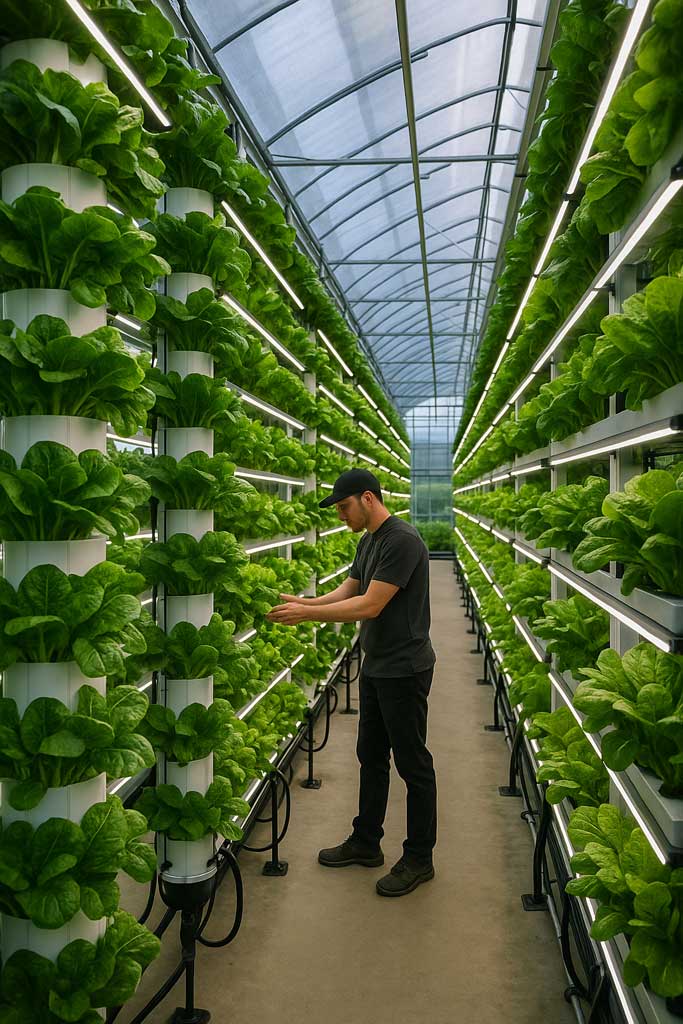
Tower systems create vertical growing columns that maximize plant density while providing excellent growing conditions and easy maintenance access.
Aeroponic Towers:
- Misting Systems: Nutrient delivery through fine mist application
- Root Chamber Design: Enclosed root zones with excellent aeration
- Plant Density: High plant counts per tower unit
- Water Efficiency: Minimal water usage through precise delivery
- Rapid Growth: Accelerated plant development through optimal root zone conditions
Hydroponic Towers:
- NFT Tower Systems: Nutrient film technique in vertical columns
- Drip-Fed Towers: Individual plant feeding through drip emitters
- Media-Based Towers: Growing substrates contained in vertical planters
- Recirculating Systems: Closed-loop nutrition for resource efficiency
Multi-Tier Bench Systems
Multi-tier benches create multiple growing levels within the greenhouse height, effectively multiplying growing space while maintaining organized production areas.
Tiered System Components:
- Structural Framework: Strong support systems for multiple growing levels
- Adjustable Shelving: Flexible height adjustment for different crops
- Lighting Integration: LED lights positioned between growing levels
- Irrigation Distribution: Water delivery to all growing levels
- Drainage Systems: Proper drainage from upper to lower levels
Crop Selection for Vertical Systems
Successful vertical growing requires careful crop selection based on plant characteristics, growth habits, and market value considerations.
Ideal Crops for Vertical Production
Certain crops are particularly well-suited to vertical growing systems based on their size, growth patterns, and value per unit of space.
Leafy Greens and Herbs:
- Lettuce Varieties: Compact growth ideal for tower and tier systems
- Spinach and Arugula: Quick-growing crops with high turnover
- Culinary Herbs: High-value crops with compact growth habits
- Microgreens: Ultra-high value crops perfect for vertical production
- Asian Greens: Bok choy, mizuna, and other compact varieties
Vining and Climbing Crops:
- Indeterminate Tomatoes: Continuous growth and harvest potential
- Cucumbers: Vigorous climbing growth with high yields
- Climbing Beans: Vertical growth habit with nitrogen fixation benefits
- Peas: Cool-season climbing crops for spring and fall production
- Climbing Strawberries: Everbearing varieties for continuous harvest
Crop Rotation and Succession Planting
Vertical systems enable sophisticated crop rotation and succession planting strategies that maximize space utilization and production continuity.
Rotation Strategies:
- Quick-Turn Crops: Rapid succession of fast-growing varieties
- Companion Planting: Compatible crops grown simultaneously in different levels
- Seasonal Transitions: Smooth changeover between warm and cool season crops
- Market Timing: Staggered harvests for consistent market supply
Lighting Solutions for Vertical Growing
Vertical growing systems require specialized lighting solutions that provide adequate illumination to all growing levels while maintaining energy efficiency and preventing excessive heat buildup.
LED Lighting Systems
LED technology is essential for vertical growing applications, providing efficient, controllable lighting that can be positioned close to plants without excessive heat generation.
LED System Design Principles:
- Inter-Canopy Lighting: LED strips positioned between plant rows
- Spectrum Optimization: Customized light spectra for different crops and growth stages
- Uniform Distribution: Even light coverage across all growing surfaces
- Dimming Capability: Adjustable intensity for optimal energy efficiency
- Heat Management: Proper heat dissipation to prevent plant stress
Light Penetration and Distribution
Effective vertical growing requires careful consideration of light penetration and distribution to ensure all plants receive adequate illumination for optimal growth.
Lighting Strategies:
- Side-Lighting: Vertical light fixtures for tower systems
- Overhead and Under-Bench: Multiple light sources for tier systems
- Reflective Surfaces: Light redistribution through reflective materials
- Light Movers: Moving fixtures for improved light distribution
- Natural Light Integration: Combining artificial and natural illumination
Irrigation and Fertigation Systems
Vertical growing systems require sophisticated irrigation solutions that deliver water and nutrients efficiently to all growing levels while managing drainage and runoff.
Drip Irrigation for Vertical Systems
Drip irrigation provides precise water and nutrient delivery to individual plants in vertical systems while minimizing water waste and runoff.
Drip System Components:
- Pressure-Compensating Emitters: Consistent flow rates at all elevations
- Multi-Level Distribution: Supply lines to all growing levels
- Individual Plant Lines: Dedicated irrigation for each plant position
- Filtration Systems: Prevention of emitter clogging in vertical lines
- Drainage Collection: Runoff capture and recirculation systems
Hydroponic Circulation Systems
Hydroponic vertical systems require specialized circulation systems that overcome gravity challenges while maintaining optimal nutrient delivery.
Circulation Strategies:
- Multi-Zone Pumping: Separate circulation for different tower levels
- Gravity-Fed Systems: Utilizing height for natural flow distribution
- Recirculation Loops: Closed systems that minimize nutrient waste
- Pressure Management: Consistent pressure throughout vertical systems
- Backup Systems: Redundancy to prevent crop loss from equipment failure
Structural Design and Engineering
Vertical growing systems require robust structural design that safely supports plants, equipment, and maintenance activities while providing operational efficiency.
Load-Bearing Considerations
Proper structural engineering ensures safe operation and prevents system failures that could damage crops and equipment.
Structural Requirements:
- Live Load Capacity: Support for fully grown crops and maintenance activities
- Dynamic Loading: Resistance to movement and vibration
- Environmental Loads: Wind and seismic considerations for greenhouse structures
- Safety Factors: Adequate strength margins for safe operation
- Material Selection: Corrosion-resistant materials for greenhouse environments
Accessibility and Ergonomics
Vertical systems must provide safe, comfortable access for all maintenance and harvesting activities to ensure operational efficiency and worker safety.
Access Design Features:
- Working Heights: Optimal positioning for comfortable access
- Platform Systems: Safe working surfaces at multiple levels
- Ladder Integration: Secure climbing access to upper levels
- Tool Storage: Convenient storage for maintenance equipment
- Emergency Access: Safe evacuation routes from elevated positions
Environmental Control for Vertical Systems
Vertical growing creates unique environmental challenges that require specialized control strategies to maintain optimal growing conditions throughout the vertical space.
Air Circulation and Ventilation
Proper air movement is critical in vertical systems to prevent stagnant air pockets and ensure uniform environmental conditions at all growing levels.
Ventilation Strategies:
- Vertical Air Movement: Fans positioned to move air between levels
- Horizontal Circulation: Air movement across growing surfaces
- Temperature Stratification Prevention: Mixing of air at different heights
- Humidity Management: Air exchange to prevent moisture buildup
- CO2 Distribution: Even carbon dioxide distribution to all levels
Temperature and Humidity Control
Vertical systems can create microclimates at different levels that require monitoring and control to maintain optimal growing conditions.
Environmental Management:
- Multi-Zone Sensing: Temperature and humidity monitoring at all levels
- Gradient Management: Control of temperature variations between levels
- Localized Climate Control: Zone-specific heating and cooling
- Thermal Mass Utilization: Heat storage and distribution strategies
Automation and Control Systems
Vertical growing systems benefit greatly from automation that manages the complexity of multi-level production while reducing labor requirements.
Automated Growing Systems
Automation systems integrate environmental controls, irrigation, lighting, and monitoring to optimize vertical growing operations.
Automation Components:
- Environmental Controllers: Integrated management of temperature, humidity, and lighting
- Irrigation Automation: Scheduled and sensor-based watering systems
- Nutrient Dosing: Automated fertilizer injection and pH control
- Data Logging: Comprehensive monitoring and record keeping
- Alert Systems: Immediate notification of system problems
Monitoring and Data Collection
Advanced monitoring systems track performance across all levels of vertical growing systems, enabling optimization and problem prevention.
Monitoring Parameters:
- Multi-Level Environmental Data: Conditions at each growing level
- Plant Performance Metrics: Growth rates and yield data by position
- Resource Utilization: Water, nutrients, and energy consumption
- System Performance: Equipment operation and maintenance needs
Economic Analysis and ROI
Vertical growing systems require significant initial investment but can provide excellent returns through increased production capacity and operational efficiency.
Investment Considerations
Understanding all costs associated with vertical growing enables realistic financial planning and investment decisions.
Initial Investment Components:
- Structural Systems: Framework, shelving, and support structures
- Growing Equipment: Containers, irrigation, and growing media
- Lighting Systems: LED fixtures and controls for all levels
- Automation Equipment: Controls, sensors, and monitoring systems
- Installation Costs: Professional assembly and commissioning
Revenue and Productivity Analysis
Vertical systems generate revenue through increased production capacity and the ability to grow high-value crops in intensive systems.
Revenue Enhancement Factors:
- Increased Plant Density: 3-5 times more plants per square foot
- Faster Crop Cycles: Optimal growing conditions accelerate production
- Premium Crop Production: High-value crops like herbs and microgreens
- Year-Round Production: Consistent harvests independent of weather
- Market Advantages: Reliable supply of fresh, local produce
Installation and Setup Procedures
Successful vertical growing system installation requires careful planning, proper sequencing, and attention to detail to ensure safe, efficient operation.
Installation Planning
Comprehensive planning prevents installation problems and ensures systems meet operational requirements from the start.
Planning Considerations:
- Structural Assessment: Verify greenhouse capacity for additional loads
- Utility Requirements: Electrical, water, and drainage infrastructure
- Access Planning: Installation access and ongoing maintenance requirements
- Workflow Design: Efficient layout for planting, maintenance, and harvesting
- Expansion Planning: Future growth and system modification capabilities
System Commissioning
Proper commissioning ensures all systems operate correctly and safely before introducing plants to the growing environment.
Commissioning Steps:
- Structural Testing: Load testing and safety verification
- System Integration: Testing of all automated systems and controls
- Environmental Testing: Verification of uniform conditions throughout the system
- Irrigation Testing: Flow rates and distribution uniformity
- Staff Training: Operator training on all system functions
Maintenance and Troubleshooting
Vertical growing systems require specialized maintenance procedures to ensure reliable operation and prevent problems that could affect multiple growing levels.
Preventive Maintenance Programs
Regular maintenance prevents system failures and ensures optimal performance throughout the system’s operational life.
Maintenance Activities:
- Structural Inspections: Regular checking of support systems and connections
- Irrigation System Maintenance: Cleaning and calibration of drip emitters
- Lighting System Service: LED fixture cleaning and performance monitoring
- Environmental System Checks: Calibration of sensors and controllers
- Safety System Testing: Verification of emergency and safety equipment
Future Trends in Vertical Growing
Vertical growing technology continues to evolve with advances in automation, materials science, and plant science creating new opportunities for intensive production.
Emerging Technologies
Advanced System Features:
- Robotic Integration: Automated planting, maintenance, and harvesting
- AI-Driven Controls: Machine learning optimization of growing conditions
- Advanced Materials: Lightweight, high-strength materials for larger systems
- Integrated Sensors: Plant-level monitoring and response systems
- Modular Design: Flexible systems that adapt to changing requirements
Vertical growing represents the future of intensive greenhouse production, offering unprecedented space utilization and production capacity. Success requires careful system selection, proper installation, and ongoing optimization to realize the full potential of three-dimensional growing systems. With proper implementation, vertical growing systems provide excellent returns on investment while positioning operations for competitive advantage in high-value markets.
 English
  Spanish
  French
  German
  Portuguese
  Arabic
  Russian
  Chinese