The Critical Importance of Polycarbonate Panel Maintenance
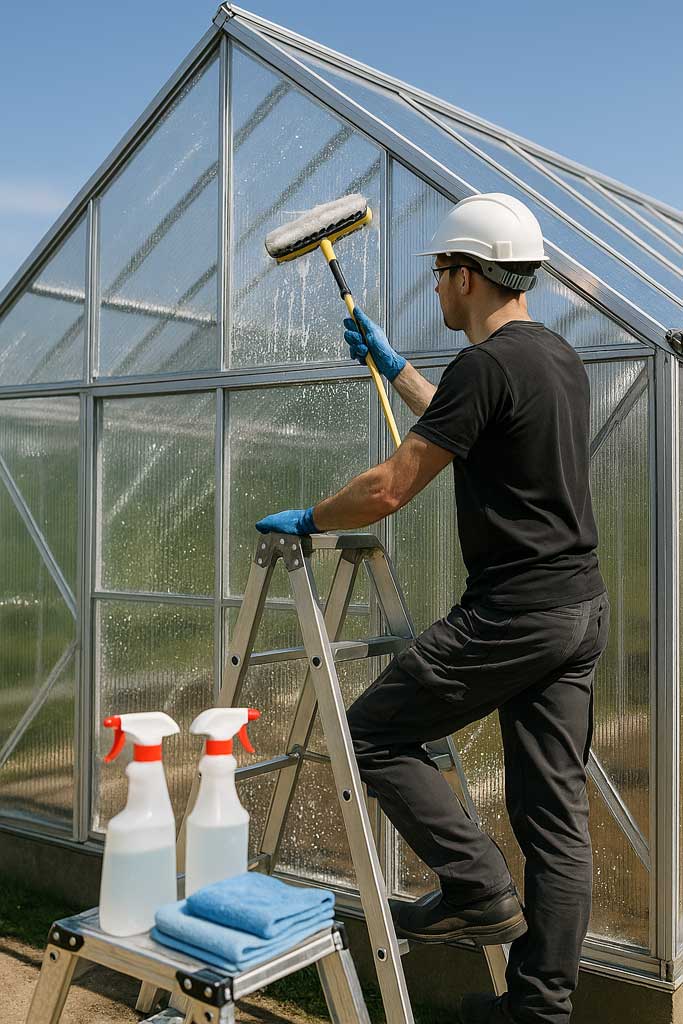
Polycarbonate panel maintenance directly impacts greenhouse performance, affecting light transmission, energy efficiency, and overall growing conditions. Proper care maintains the panels’ excellent insulation properties while preserving the crystal-clear appearance and structural integrity that make polycarbonate the preferred glazing material for modern greenhouse operations.
Neglected panels can lose significant light transmission capacity, develop permanent staining, and experience accelerated aging that compromises both performance and appearance. Regular maintenance preserves the substantial investment in quality polycarbonate glazing while ensuring optimal growing conditions throughout the greenhouse’s operational life.
Benefits of Proper Panel Maintenance
Systematic panel care provides multiple benefits that directly impact both plant performance and operational efficiency.
Maintenance Benefits:
- Optimal Light Transmission: Maintains 90%+ light transmission for maximum plant growth
- Energy Efficiency: Clean panels improve thermal performance and reduce heating costs
- Extended Lifespan: Proper care extends panel life beyond warranty periods
- Professional Appearance: Clean, well-maintained structures enhance property value
- Reduced Replacement Costs: Preventive care delays expensive panel replacement
- Improved Plant Health: Better light conditions promote healthier plant growth
Understanding Polycarbonate Material Properties
Effective maintenance requires understanding polycarbonate’s unique properties and how they affect cleaning methods and care procedures.
Material Characteristics
Polycarbonate’s physical and chemical properties determine appropriate cleaning methods and maintenance approaches.
Key Material Properties:
- UV Coating: Protective UV-resistant coating on exterior surfaces
- Anti-Drip Coating: Interior condensation control coating on some panels
- Thermal Expansion: Expansion and contraction with temperature changes
- Chemical Resistance: Resistance to most chemicals but sensitivity to specific solvents
- Impact Resistance: High impact strength but sensitivity to stress cracking
- Static Attraction: Tendency to attract dust and debris electrostatically
Common Contamination Types
Different types of contamination require specific removal methods to avoid panel damage while achieving thorough cleaning.
Contamination Categories:
- Organic Deposits: Algae, pollen, bird droppings, and plant residues
- Mineral Buildup: Hard water deposits, salt accumulation, and mineral staining
- Environmental Pollution: Air pollution, exhaust deposits, and industrial fallout
- Protective Film Residue: Adhesive residue from protective films
- Construction Debris: Concrete dust, paint overspray, and construction materials
Cleaning Methods and Techniques
Proper cleaning techniques remove contamination effectively while protecting panel surfaces and preserving protective coatings.
Basic Cleaning Procedures
Standard cleaning procedures provide effective contamination removal for regular maintenance applications.
Standard Cleaning Process:
- Pre-Rinse: Remove loose debris with clean water to prevent scratching
- Cleaning Solution Application: Apply appropriate cleaning solution to wetted surface
- Gentle Agitation: Use soft brush or cloth to work cleaning solution
- Thorough Rinse: Complete removal of cleaning solution with clean water
- Spot Treatment: Address stubborn deposits with targeted cleaning
- Final Inspection: Check for missed areas and streaking
Cleaning Solution Selection
Appropriate cleaning solutions effectively remove contamination while protecting panel integrity and surface coatings.
Recommended Cleaning Solutions:
- Mild Soap Solution: Gentle dish soap (1:100 ratio) for general cleaning
- Isopropyl Alcohol: 70% solution for removing films and sticky residues
- Ammonia Solution: Dilute ammonia (1:10 ratio) for heavy contamination
- Commercial Polycarbonate Cleaners: Specialized cleaners designed for polycarbonate
- Deionized Water: Final rinse to prevent mineral deposits
Solutions to Avoid:
- Abrasive Cleaners: Scouring powders or abrasive compounds
- Strong Alkalis: Caustic cleaners that can damage UV coatings
- Aromatic Solvents: Toluene, benzene, or other aggressive solvents
- Gasoline or Kerosene: Petroleum-based solvents that cause stress cracking
- Methyl Ethyl Ketone: Strong solvents that can dissolve polycarbonate
Cleaning Tools and Equipment
Proper tools ensure effective cleaning while preventing scratches, streaks, and other damage to polycarbonate surfaces.
Recommended Cleaning Tools
Appropriate tools provide effective cleaning action while protecting delicate panel surfaces.
Essential Cleaning Equipment:
- Soft Brushes: Natural bristle or soft synthetic brushes for gentle scrubbing
- Microfiber Cloths: Lint-free cloths that won’t scratch surfaces
- Squeegees: Rubber-blade squeegees for streak-free drying
- Extension Poles: Telescopic poles for reaching high areas safely
- Spray Bottles: For applying cleaning solutions evenly
- Garden Hose: For rinsing and applying water pressure
Tools to Avoid
Certain tools can damage polycarbonate surfaces and should never be used for panel cleaning.
Prohibited Cleaning Tools:
- Steel Wool: Scratches surface and removes protective coatings
- Razor Blades: Can cause deep scratches and stress points
- Abrasive Pads: Damage surface finish and clarity
- Stiff Brushes: Wire brushes or stiff bristles that scratch
- Paper Towels: Can leave lint and may scratch when dirty
Cleaning Schedule and Frequency
Regular cleaning schedules maintain optimal panel performance while preventing buildup of contamination that becomes difficult to remove.
Maintenance Frequency Guidelines
Cleaning frequency depends on environmental conditions, contamination sources, and performance requirements.
Recommended Cleaning Schedule:
- Monthly Cleaning: Regular cleaning in normal environmental conditions
- Bi-Weekly Cleaning: High-pollution areas or heavy contamination
- Weekly Cleaning: Critical applications requiring maximum light transmission
- Seasonal Deep Cleaning: Comprehensive cleaning and inspection
- Storm Cleanup: Immediate cleaning after severe weather events
Environmental Factors Affecting Frequency
Local environmental conditions significantly impact cleaning requirements and schedule planning.
Factors Increasing Cleaning Frequency:
- Air Pollution: Industrial areas with high particulate levels
- Pollen Seasons: Heavy pollen loads during blooming periods
- Coastal Locations: Salt spray and marine environment effects
- Agricultural Areas: Dust and agricultural chemicals in the air
- Construction Activity: Nearby construction generating dust and debris
Specialized Cleaning Procedures
Certain contamination types require specialized cleaning procedures to achieve complete removal without panel damage.
Algae and Biological Growth Removal
Algae and other biological growth require specific treatment to achieve complete removal and prevent recurrence.
Algae Removal Process:
- Initial Assessment: Identify type and extent of biological growth
- Pre-Treatment: Apply algaecide or bleach solution (1:10 ratio)
- Dwell Time: Allow treatment to work for 5-10 minutes
- Gentle Scrubbing: Use soft brush to remove loosened growth
- Thorough Rinse: Complete removal of treatment chemicals
- Prevention: Improve drainage and air circulation
Hard Water Deposit Removal
Mineral deposits from hard water require specific treatment to dissolve buildup without damaging panel surfaces.
Mineral Deposit Treatment:
- Mild Acid Solution: White vinegar (1:1 with water) for light deposits
- Commercial Cleaners: Specialized lime and scale removers
- Extended Contact Time: Allow acid solution to work on deposits
- Gentle Agitation: Soft brush to help dissolve stubborn deposits
- Neutralization: Rinse thoroughly to remove all acid residue
- Prevention: Use deionized water for final rinse
Adhesive and Film Residue Removal
Protective film adhesive requires careful removal to prevent damage to panel surfaces and UV coatings.
Adhesive Removal Procedure:
- Heat Application: Warm panels to soften adhesive (hair dryer on low)
- Alcohol Treatment: Apply isopropyl alcohol to soften residue
- Gentle Scraping: Use plastic scraper to remove softened adhesive
- Solvent Application: Apply more alcohol as needed
- Final Cleaning: Complete cleaning with soap solution
- Inspection: Ensure complete removal without damage
Safety Considerations and Procedures
Safe cleaning procedures protect workers while preventing accidents and panel damage during maintenance operations.
Personal Safety Equipment
Appropriate safety equipment protects workers from chemical exposure and fall hazards during cleaning operations.
Required Safety Equipment:
- Safety Glasses: Eye protection from chemical splash and debris
- Rubber Gloves: Chemical-resistant gloves for hand protection
- Non-Slip Footwear: Shoes with good traction on wet surfaces
- Fall Protection: Harnesses and safety lines for elevated work
- Respiratory Protection: Masks when using chemical cleaners
Access and Working at Height
Safe access procedures prevent accidents while enabling effective cleaning of all panel surfaces.
Safe Access Methods:
- Stable Ladders: Proper ladder placement and three-point contact
- Extension Poles: Ground-based cleaning to minimize height exposure
- Scaffold Systems: Stable platforms for extensive cleaning operations
- Safety Harnesses: Fall protection for roof and elevated work
- Weather Conditions: Avoid cleaning during windy or wet conditions
Seasonal Maintenance Considerations
Different seasons present unique challenges and opportunities for polycarbonate panel maintenance and care.
Spring Maintenance Tasks
Spring cleaning addresses winter accumulation while preparing panels for the growing season.
Spring Cleaning Priorities:
- Comprehensive Cleaning: Remove winter accumulation of dirt and debris
- Seal Inspection: Check edge sealing for winter damage
- Algae Prevention: Clean gutters and improve drainage
- Light Transmission Testing: Measure and document panel clarity
- UV Coating Inspection: Check for coating degradation or damage
Summer Maintenance Requirements
Summer maintenance focuses on frequent cleaning to maintain maximum light transmission during peak growing periods.
Summer Maintenance Activities:
- Frequent Cleaning: Increased cleaning frequency for optimal light
- Cooling System Integration: Clean panels to improve cooling efficiency
- Storm Damage Assessment: Immediate post-storm inspection and cleaning
- Insect Control: Remove insects attracted to lighting systems
Fall Preparation
Fall maintenance prepares panels for winter conditions while addressing seasonal contamination.
Fall Maintenance Tasks:
- Leaf Removal: Clean accumulated leaves and organic debris
- Gutter Cleaning: Ensure proper drainage before winter
- Seal Maintenance: Repair any seal damage before freeze cycles
- Winter Preparation: Apply protective treatments if needed
Winter Care
Winter maintenance addresses ice, snow, and condensation while preparing for spring cleaning.
Winter Maintenance Considerations:
- Snow Removal: Safe snow removal without panel damage
- Ice Management: Prevent ice buildup that can damage seals
- Condensation Control: Monitor and address condensation issues
- Access Safety: Extra caution for icy conditions
Preventive Care and Protection
Preventive measures reduce contamination buildup and protect panels from damage, extending their useful life and reducing maintenance requirements.
Environmental Protection Strategies
Environmental modifications reduce contamination sources and protect panels from damage.
Protection Methods:
- Landscaping Management: Control dust sources and plant debris
- Air Filtration: Filter incoming air to reduce particulate contamination
- Drainage Improvement: Prevent standing water and splash contamination
- Wind Barriers: Reduce wind-blown debris and contamination
- Traffic Control: Minimize dust from vehicle traffic
Protective Treatments
Specialized treatments can provide additional protection and make future cleaning easier.
Treatment Options:
- Anti-Static Treatments: Reduce dust attraction and accumulation
- Hydrophobic Coatings: Improve water shedding and self-cleaning
- UV Protection Enhancement: Additional UV protection for extended life
- Anti-Algae Treatments: Prevent biological growth in humid conditions
Quality Control and Performance Monitoring
Regular performance monitoring ensures cleaning effectiveness while identifying trends that may require procedure modifications.
Light Transmission Monitoring
Quantitative measurement of light transmission provides objective assessment of panel cleanliness and condition.
Monitoring Procedures:
- Baseline Measurement: Establish initial light transmission values
- Regular Testing: Monthly or quarterly transmission measurements
- Performance Tracking: Document changes in transmission over time
- Cleaning Effectiveness: Before and after cleaning measurements
- Trend Analysis: Identify degradation patterns and causes
Visual Inspection Protocols
Systematic visual inspections identify problems early and guide maintenance planning.
Inspection Checklist:
- Surface Clarity: Overall cleanliness and transparency
- Coating Condition: UV and anti-drip coating integrity
- Seal Integrity: Edge sealing condition and adhesion
- Physical Damage: Cracks, scratches, or impact damage
- Contamination Patterns: Areas of persistent contamination
Troubleshooting Common Problems
Understanding common panel problems and their solutions enables effective maintenance and prevents minor issues from becoming major problems.
Persistent Staining Issues
Problem: Stains that resist normal cleaning
- Cause: Long-term contamination or improper cleaning products
- Solution: Progressive cleaning with stronger solutions
- Prevention: More frequent cleaning and proper technique
Streaking Problems
Problem: Streaks and residue after cleaning
- Cause: Improper rinse or poor water quality
- Solution: Use deionized water for final rinse
- Prevention: Proper rinsing technique and water treatment
Scratching and Surface Damage
Problem: Scratches from cleaning activities
- Cause: Improper tools or abrasive particles
- Solution: Use only approved tools and pre-rinse thoroughly
- Prevention: Proper tool selection and technique training
Record Keeping and Documentation
Comprehensive maintenance records support warranty claims, guide maintenance planning, and track panel performance over time.
Maintenance Documentation
Detailed records provide valuable information for optimizing maintenance procedures and warranty support.
Essential Records:
- Cleaning Schedules: Dates and methods used for all cleaning
- Performance Data: Light transmission measurements and trends
- Problem Reports: Documentation of issues and corrective actions
- Material Usage: Cleaning products and quantities used
- Cost Tracking: Labor and material costs for maintenance activities
Proper polycarbonate panel maintenance represents a critical investment in greenhouse performance that pays dividends through improved light transmission, extended panel life, and optimal growing conditions. Regular cleaning and preventive care preserve the substantial investment in quality glazing while ensuring maximum productivity throughout the greenhouse’s operational life. The systematic approach to panel maintenance outlined here provides the foundation for successful long-term greenhouse operations.

 English
  Spanish
  French
  German
  Portuguese
  Arabic
  Russian
  Chinese