The Critical Importance of Equipment Maintenance
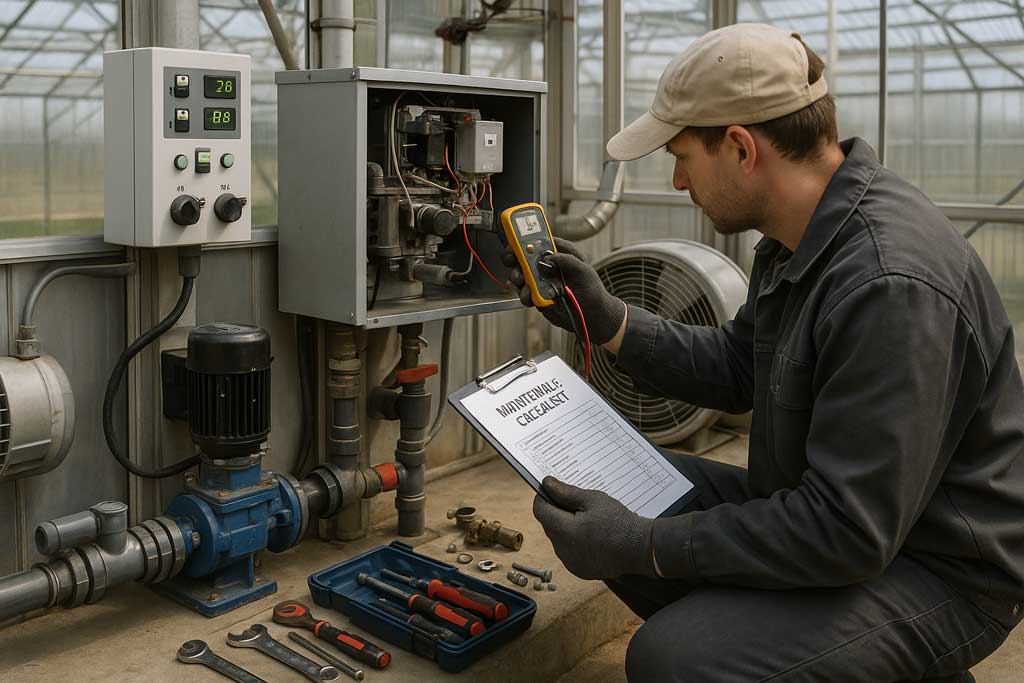
Systematic equipment maintenance forms the backbone of reliable greenhouse operations, preventing costly breakdowns that can devastate crops and disrupt production schedules. A well-planned maintenance program extends equipment life, improves energy efficiency, and ensures consistent environmental conditions for optimal plant growth.
Professional maintenance schedules balance the costs of preventive care against the risks of equipment failure, creating systematic approaches that maximize reliability while minimizing operational disruptions and maintenance expenses.
Benefits of Systematic Maintenance
Implementing comprehensive maintenance programs provides quantifiable benefits that justify the investment in time and resources required for proper equipment care.
Operational Benefits:
- Reduced Breakdowns: 70-80% reduction in unexpected equipment failures
- Extended Equipment Life: 30-50% longer service life for major components
- Improved Efficiency: 15-25% better energy performance through proper maintenance
- Lower Repair Costs: Prevention of major failures through early problem detection
- Consistent Performance: Reliable environmental conditions for crop success
Economic Advantages:
- Reduced Operating Costs: Lower energy consumption and repair expenses
- Improved Crop Quality: Consistent conditions produce higher-quality products
- Production Reliability: Reduced risk of crop losses from equipment failures
- Insurance Benefits: Lower premiums and reduced claims from well-maintained equipment
- Resale Value: Better equipment condition maintains higher asset values
Heating System Maintenance
Heating systems represent the most critical equipment in greenhouse operations, requiring careful maintenance to ensure reliable operation during cold weather when crop survival depends on consistent heat delivery.
Boiler and Furnace Maintenance
Central heating systems require comprehensive maintenance programs that address combustion efficiency, safety systems, and heat distribution components.
Monthly Heating System Tasks:
- Combustion Analysis: Test combustion efficiency and adjust air-fuel ratios
- Heat Exchanger Inspection: Check for corrosion, scaling, or damage
- Burner Maintenance: Clean burner components and adjust flame patterns
- Safety Control Testing: Verify operation of all safety shutoffs and alarms
- Fuel System Inspection: Check filters, valves, and supply lines
- Ignition System Check: Test pilot lights or electronic ignition systems
- Ventilation Verification: Ensure adequate combustion air and exhaust
Seasonal Heating Maintenance:
- Professional Tune-Up: Annual service by qualified technicians
- Complete Combustion Cleaning: Remove soot and deposits from heat exchangers
- Control System Calibration: Verify and adjust all temperature controls
- Chimney and Flue Inspection: Check for blockages or deterioration
- Insulation Assessment: Evaluate and improve system insulation
- Backup System Testing: Verify emergency heating system operation
Heat Distribution System Care
Heat distribution systems require regular maintenance to ensure even temperature distribution and prevent hot or cold spots that can affect crop quality.
Heat Distribution Maintenance:
- Pipe and Duct Inspection: Check for leaks, corrosion, or damage
- Insulation Maintenance: Repair or replace damaged insulation
- Circulation Pump Service: Lubricate bearings and check seals
- Valve Operation Testing: Verify proper operation of all control valves
- Temperature Sensor Calibration: Check accuracy of temperature monitoring
- Zone Control Verification: Test individual zone heating controls
Ventilation System Maintenance
Ventilation systems require regular maintenance to ensure adequate air exchange and prevent the buildup of humidity, heat, and harmful gases that can damage crops.
Exhaust Fan Maintenance
Exhaust fans are critical components that must operate reliably to maintain proper greenhouse ventilation and prevent dangerous heat buildup.
Weekly Fan Maintenance:
- Visual Inspection: Check for unusual vibration, noise, or operation
- Belt Tension Check: Adjust belt tension on belt-driven fans
- Lubrication Points: Grease bearings according to manufacturer specifications
- Guard and Screen Cleaning: Remove debris that restricts airflow
- Electrical Connection Check: Inspect connections for tightness and corrosion
Monthly Fan System Tasks:
- Motor Performance Testing: Check amperage draw and operating temperature
- Blade Balance Verification: Ensure proper fan blade balance and condition
- Housing Inspection: Check fan housing for cracks or deterioration
- Mounting Security: Verify tight mounting and vibration dampening
- Variable Speed Control Testing: Test VFD operation and programming
- Shutter Operation Check: Verify proper opening and closing of intake shutters
Natural Ventilation System Care
Automated vent systems require regular maintenance to ensure reliable operation when cooling is needed to prevent crop stress.
Vent System Maintenance:
- Vent Opener Calibration: Test and adjust automatic vent opener settings
- Lubrication Service: Lubricate all moving parts and pivot points
- Weather Sealing Inspection: Check gaskets and seals for proper sealing
- Manual Override Testing: Verify manual control operation
- Storm Protection Check: Test emergency closure systems
- Screen and Filter Maintenance: Clean or replace ventilation screens
Irrigation System Maintenance
Irrigation systems require careful maintenance to ensure uniform water distribution and prevent system failures that could damage crops through drought stress or flooding.
Pump and Pressure System Maintenance
Irrigation pumps and pressure systems are critical components that require regular service to maintain reliable water delivery throughout the greenhouse.
Weekly Pump Maintenance:
- Operating Pressure Check: Verify system pressure within design parameters
- Flow Rate Monitoring: Check water flow rates to detect restrictions
- Leak Detection: Inspect all connections and fittings for leaks
- Pump Performance: Monitor pump operation for unusual noise or vibration
- Pressure Tank Inspection: Check air pressure in pressure tanks
Monthly Pump System Tasks:
- Motor Service: Check motor performance and electrical connections
- Impeller Inspection: Check pump impeller for wear or damage
- Seal and Gasket Check: Inspect and replace worn seals
- Suction Line Inspection: Check for air leaks in suction piping
- Pressure Switch Calibration: Test and adjust pressure switch settings
- Backup Pump Testing: Verify operation of redundant pump systems
Distribution System Maintenance
Irrigation distribution systems require regular cleaning and adjustment to maintain uniform water delivery to all plants.
Distribution System Care:
- Emitter Cleaning: Clean clogged drip emitters and spray nozzles
- Filter Replacement: Replace irrigation system filters regularly
- Line Flushing: Flush distribution lines to remove accumulated debris
- Pressure Regulation: Check and adjust pressure-reducing valves
- Timer Programming: Verify and update irrigation timing schedules
- Zone Control Testing: Test individual zone operation and coverage
Environmental Control System Maintenance
Environmental control systems integrate multiple components to maintain optimal growing conditions, requiring systematic maintenance of sensors, controllers, and actuators.
Sensor and Monitoring Equipment
Accurate environmental monitoring depends on properly maintained sensors that provide reliable data for control system operation.
Sensor Maintenance Schedule:
- Monthly Calibration: Verify accuracy of temperature and humidity sensors
- Cleaning Procedures: Clean sensor elements to ensure accurate readings
- Connection Inspection: Check all electrical connections for corrosion
- Range Verification: Test sensors throughout their operating range
- Replacement Planning: Track sensor age and plan replacement schedules
- Data Logging Review: Analyze historical data for sensor drift or failure
Control System Maintenance
Control systems require regular maintenance to ensure reliable operation and accurate response to changing environmental conditions.
Control System Tasks:
- Software Updates: Install manufacturer updates and security patches
- Backup Procedures: Regular backup of control system programming
- Battery Replacement: Replace backup batteries in controllers and sensors
- Communication Testing: Verify network connections and data transmission
- Alarm System Testing: Test all alarm functions and notification systems
- User Interface Maintenance: Clean displays and check input devices
Electrical System Maintenance
Electrical systems require specialized maintenance to ensure safe operation and prevent power-related equipment failures that could disrupt greenhouse operations.
Power Distribution Maintenance
Electrical distribution systems must be maintained to prevent power outages and electrical hazards that could damage equipment or endanger personnel.
Electrical Maintenance Tasks:
- Connection Tightening: Check and tighten all electrical connections
- Insulation Testing: Test insulation resistance on motors and heaters
- Ground System Verification: Check grounding system integrity
- Circuit Protection Testing: Test operation of breakers and fuses
- Load Analysis: Monitor electrical loads and identify imbalances
- Emergency System Testing: Test backup generators and transfer switches
Lighting System Maintenance
Greenhouse lighting systems require regular maintenance to maintain optimal light output and energy efficiency.
Lighting Maintenance:
- Fixture Cleaning: Clean light fixtures and reflectors for maximum output
- Lamp Replacement: Replace lamps before they reach end of life
- Ballast Inspection: Check ballast operation and electrical connections
- Timer and Control Testing: Verify lighting control system operation
- Energy Monitoring: Track energy consumption and efficiency trends
Structural Maintenance
Greenhouse structures require regular inspection and maintenance to ensure structural integrity and prevent damage from weather and normal wear.
Frame and Foundation Inspection
Structural components must be regularly inspected and maintained to prevent failures that could damage crops and equipment.
Structural Maintenance Tasks:
- Foundation Inspection: Check for settling, cracks, or deterioration
- Frame Component Check: Inspect all structural connections and members
- Hardware Tightening: Tighten bolts and connections throughout structure
- Corrosion Assessment: Check for rust or corrosion on metal components
- Door and Vent Adjustment: Adjust doors and vents for proper operation
- Drainage System Maintenance: Clean gutters and drainage systems
Glazing and Covering Maintenance
Greenhouse coverings require regular care to maintain transparency, insulation properties, and structural integrity.
Glazing Maintenance:
- Panel Cleaning: Regular cleaning for maximum light transmission
- Seal Inspection: Check and replace worn glazing seals
- Damage Assessment: Identify and repair cracks or holes
- Thermal Expansion Management: Ensure proper expansion joint function
- Condensation Control: Address condensation problems that affect visibility
Maintenance Scheduling and Record Keeping
Effective maintenance programs require systematic scheduling and comprehensive record keeping to track equipment performance and maintenance history.
Maintenance Schedule Development
Creating comprehensive maintenance schedules ensures all equipment receives appropriate care while minimizing operational disruptions.
Schedule Planning Factors:
- Manufacturer Recommendations: Follow equipment manufacturer maintenance schedules
- Operating Conditions: Adjust schedules for actual operating conditions
- Critical Equipment Priority: Prioritize maintenance on mission-critical systems
- Seasonal Considerations: Plan intensive maintenance during low-demand periods
- Resource Availability: Balance maintenance tasks with available labor and resources
Documentation and Record Systems
Comprehensive maintenance records enable tracking of equipment performance, warranty claims, and replacement planning.
Essential Maintenance Records:
- Equipment Inventories: Complete lists of all equipment with specifications
- Maintenance Logs: Detailed records of all maintenance activities
- Performance Data: Operating parameters and efficiency measurements
- Repair History: Documentation of all repairs and component replacements
- Cost Tracking: Maintenance costs and budget analysis
- Warranty Information: Warranty periods and claim procedures
Preventive vs. Reactive Maintenance
Understanding the balance between preventive and reactive maintenance strategies enables optimal resource allocation and equipment reliability.
Preventive Maintenance Benefits
Preventive maintenance provides significant advantages over reactive approaches, despite higher upfront costs.
Preventive Maintenance Advantages:
- Reduced Failures: Significant reduction in unexpected breakdowns
- Extended Equipment Life: Longer service life through proper care
- Planned Downtime: Scheduled maintenance during convenient periods
- Cost Predictability: Predictable maintenance budgets and expenses
- Improved Safety: Reduced risk of equipment-related accidents
Reactive Maintenance Considerations
While preventive maintenance is preferred, some reactive maintenance is inevitable and must be managed effectively.
Reactive Maintenance Management:
- Emergency Response Plans: Procedures for rapid response to failures
- Spare Parts Inventory: Critical spare parts for common failures
- Service Contractor Relationships: Established relationships with reliable service providers
- Backup System Utilization: Temporary solutions during equipment repairs
- Failure Analysis: Investigation of failures to prevent recurrence
Seasonal Maintenance Planning
Seasonal maintenance planning coordinates intensive maintenance activities with greenhouse operational cycles to minimize disruptions while ensuring equipment readiness.
Spring Maintenance Preparation
Spring preparation ensures all systems are ready for increased operational demands as growing activity intensifies.
Spring Maintenance Focus:
- Cooling System Preparation: Prepare ventilation and cooling systems for summer operation
- Irrigation System Startup: Full system testing and optimization
- Heating System Transition: Reduce heating system operation and perform maintenance
- Structural Inspection: Assess winter damage and perform repairs
- Equipment Calibration: Calibrate all sensors and control systems
Fall Maintenance Preparation
Fall maintenance prepares systems for winter operation and addresses equipment that has operated intensively during the growing season.
Fall Maintenance Priorities:
- Heating System Preparation: Comprehensive heating system service and testing
- Winterization Procedures: Protect water systems from freezing
- Insulation Assessment: Evaluate and improve thermal efficiency
- Emergency System Testing: Verify backup heating and power systems
- Equipment Storage: Proper storage of seasonal equipment
Cost-Benefit Analysis of Maintenance Programs
Understanding the economic impact of maintenance programs enables optimization of maintenance investments for maximum return on investment.
Maintenance Cost Analysis
Comprehensive cost analysis includes all direct and indirect costs associated with equipment maintenance programs.
Maintenance Cost Components:
- Labor Costs: Internal staff time and external service contractor fees
- Parts and Materials: Replacement parts, filters, lubricants, and supplies
- Equipment Costs: Maintenance tools and diagnostic equipment
- Downtime Costs: Lost production during maintenance activities
- Energy Costs: Additional energy consumption from poorly maintained equipment
Return on Investment Calculation
Maintenance programs provide measurable returns through reduced failures, extended equipment life, and improved efficiency.
ROI Factors:
- Avoided Repair Costs: Prevention of major failures through early intervention
- Extended Equipment Life: Delayed capital replacement costs
- Energy Savings: Improved efficiency reduces operating costs
- Reduced Crop Losses: Prevention of environmental control failures
- Insurance Benefits: Lower premiums and reduced claims
Systematic equipment maintenance represents one of the most important investments greenhouse operators can make, providing reliable operation, extended equipment life, and optimal growing conditions. A well-planned maintenance program prevents costly failures, ensures consistent crop quality, and maximizes the return on investment in greenhouse equipment. Success requires commitment to systematic procedures, comprehensive record keeping, and continuous improvement based on equipment performance and maintenance experience.

 English
  Spanish
  French
  German
  Portuguese
  Arabic
  Russian
  Chinese