
The Internet of Things Revolution in Agriculture
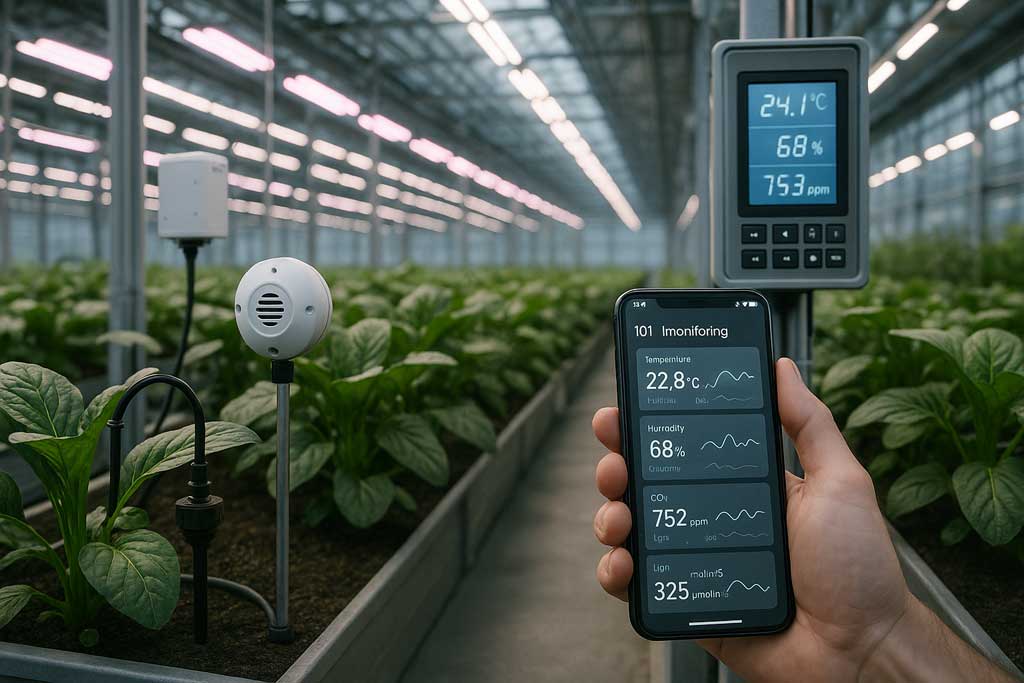
Internet of Things (IoT) technology has transformed greenhouse monitoring from manual observation to continuous, automated data collection. IoT sensor networks provide real-time insights into every aspect of the growing environment, enabling precision agriculture that was previously impossible.
These interconnected sensor systems create a digital twin of your greenhouse, capturing millions of data points that reveal patterns, predict problems, and optimize growing conditions. The result is more efficient resource use, higher yields, and reduced operational risks.
Understanding IoT Sensor Technology
IoT sensors are smart devices that collect environmental data and transmit it wirelessly to central monitoring systems. Unlike traditional sensors, IoT devices can communicate with each other and cloud-based platforms, creating comprehensive monitoring networks.
Key IoT Sensor Characteristics:
- Wireless Communication: No physical wiring required, enabling flexible placement
- Low Power Consumption: Battery-powered operation for months or years
- Real-Time Data Transmission: Instant alerts and continuous monitoring
- Remote Accessibility: Monitor conditions from anywhere via smartphone or computer
- Scalable Networks: Easy addition of new sensors as needs grow
Environmental Monitoring Sensors
Environmental sensors form the foundation of IoT greenhouse monitoring, tracking the key parameters that influence plant growth and health. These sensors provide the data necessary for automated climate control and optimization.
Temperature Monitoring Systems
Temperature sensors are critical for maintaining optimal growing conditions and preventing plant stress. Modern IoT temperature sensors offer high accuracy and can monitor multiple zones simultaneously.
Advanced Temperature Sensor Features:
- Multi-Zone Monitoring: Individual sensors for different greenhouse areas
- High Precision: ±0.1°C accuracy for sensitive crops
- Trend Analysis: Historical temperature patterns and predictions
- Alert Systems: Immediate notifications for temperature excursions
- Solar Radiation Shields: Accurate readings unaffected by direct sunlight
Humidity and Moisture Detection
Humidity sensors monitor both air moisture and surface condensation, helping prevent disease development while maintaining optimal growing conditions for different crop types.
Humidity Monitoring Capabilities:
- Relative Humidity Measurement: Continuous air moisture monitoring
- Dew Point Calculation: Condensation risk assessment and prevention
- Vapor Pressure Deficit (VPD): Plant transpiration optimization
- Leaf Wetness Detection: Disease prevention through surface moisture monitoring
Plant Health and Growth Monitoring
Advanced IoT sensors can monitor plant health directly, measuring parameters like chlorophyll content, growth rates, and stress indicators to optimize growing conditions and detect problems early.
Chlorophyll and Plant Vigor Sensors
Optical sensors measure plant chlorophyll content and overall vigor, providing early indicators of nutrient deficiencies, diseases, or environmental stress.
Plant Health Monitoring Features:
- NDVI Measurements: Normalized Difference Vegetation Index for plant health assessment
- Chlorophyll Content: Direct measurement of photosynthetic capacity
- Growth Rate Tracking: Automated measurement of plant size and development
- Stress Detection: Early warning systems for plant health issues
Soil and Root Zone Monitoring
Soil sensors provide crucial information about root zone conditions, enabling precise irrigation and fertigation management based on actual plant needs rather than scheduled applications.
Soil Monitoring Parameters:
- Soil Moisture Content: Volumetric water content at multiple depths
- Soil Temperature: Root zone temperature for optimal growth
- Electrical Conductivity (EC): Nutrient concentration and salinity levels
- pH Monitoring: Soil acidity and nutrient availability
- Oxygen Levels: Root health and aeration monitoring
Air Quality and Gas Monitoring
Air quality sensors monitor gases that affect plant growth and worker safety, including carbon dioxide for photosynthesis enhancement and potentially harmful gases from heating systems or decomposing materials.
Carbon Dioxide Sensing
CO2 sensors enable precise control of carbon dioxide supplementation, optimizing photosynthesis rates while avoiding waste of expensive CO2 supplies.
CO2 Monitoring Benefits:
- Photosynthesis Optimization: Maintain ideal CO2 levels for maximum plant growth
- Automated Supplementation: Precise CO2 injection based on plant needs
- Energy Efficiency: Coordinate CO2 levels with lighting and temperature
- Safety Monitoring: Prevent dangerous CO2 accumulation in enclosed spaces
Air Pollutant Detection
Specialized sensors can detect harmful gases like ethylene, ammonia, and sulfur compounds that can damage crops or create unsafe working conditions.
Air Quality Parameters:
- Ethylene Detection: Monitor fruit ripening gases that can affect other crops
- Ammonia Monitoring: Detect harmful emissions from fertilizers or heating systems
- Particulate Matter: Air filtration system performance and air quality
- Volatile Organic Compounds (VOCs): Early detection of pest infestations or plant diseases
Water and Irrigation Monitoring
Water monitoring sensors track irrigation system performance, water quality, and usage patterns to optimize water management and ensure consistent crop irrigation.
Flow and Pressure Monitoring
Flow sensors monitor water distribution throughout irrigation systems, detecting leaks, blockages, and ensuring uniform water delivery to all growing areas.
Irrigation System Monitoring:
- Flow Rate Measurement: Real-time water usage tracking and leak detection
- Pressure Monitoring: System performance and blockage detection
- Water Level Sensors: Tank and reservoir monitoring for supply management
- Valve Position Feedback: Confirmation of irrigation zone operation
Water Quality Analysis
Water quality sensors ensure irrigation water meets crop requirements and detect contamination that could harm plants or clog irrigation systems.
Water Quality Parameters:
- pH and EC Monitoring: Nutrient solution quality and plant compatibility
- Dissolved Oxygen: Water quality and root health considerations
- Turbidity Measurement: Filtration system performance and water clarity
- Chlorine Detection: Municipal water treatment chemical monitoring
Light and Radiation Monitoring
Light sensors measure natural and artificial illumination to optimize plant growth and manage supplemental lighting systems efficiently.
Photosynthetically Active Radiation (PAR) Sensors
PAR sensors measure the specific wavelengths of light used by plants for photosynthesis, enabling precise light management and energy optimization.
Light Monitoring Capabilities:
- PAR Measurement: Photosynthetically active radiation in μmol/m²/s
- Daily Light Integral (DLI): Total light accumulation for growth optimization
- Spectral Analysis: Light quality assessment for different growth stages
- UV Monitoring: Beneficial and harmful UV radiation tracking
Energy and Utility Monitoring
Energy monitoring sensors track power consumption, heating fuel usage, and other utilities to optimize operational efficiency and reduce costs.
Power Consumption Monitoring
Electrical monitoring systems track energy usage by individual systems, enabling identification of inefficiencies and optimization opportunities.
Energy Monitoring Features:
- Real-Time Power Monitoring: Individual circuit and equipment power consumption
- Peak Demand Management: Utility rate optimization and demand charge reduction
- Equipment Efficiency: Performance monitoring and maintenance scheduling
- Renewable Energy Integration: Solar and wind power generation monitoring
Data Transmission and Communication
IoT sensors rely on various communication protocols to transmit data reliably while minimizing power consumption and infrastructure requirements.
Wireless Communication Protocols
Different communication technologies offer varying ranges, power consumption, and data transmission capabilities, allowing selection of optimal protocols for specific applications.
Communication Options:
- LoRaWAN: Long-range, low-power communication for large facilities
- WiFi: High-bandwidth communication for data-intensive applications
- Zigbee: Mesh networking for reliable sensor networks
- Cellular (4G/5G): Wide-area connectivity for remote monitoring
- Satellite Communication: Global coverage for isolated facilities
Data Management and Analytics
IoT sensor data requires sophisticated management and analysis systems to transform raw measurements into actionable insights for greenhouse optimization.
Cloud-Based Data Platforms
Modern IoT platforms provide comprehensive data storage, analysis, and visualization capabilities accessible from any internet-connected device.
Data Platform Features:
- Real-Time Dashboards: Live monitoring and alert systems
- Historical Analysis: Trend identification and pattern recognition
- Predictive Analytics: Machine learning for optimization recommendations
- API Integration: Connection with other agricultural software systems
Installation and Deployment Considerations
Successful IoT sensor deployment requires careful planning of sensor placement, network design, and power management to ensure reliable operation and comprehensive coverage.
Sensor Placement Strategies
Optimal sensor placement maximizes data quality while minimizing installation and maintenance costs. Strategic positioning ensures representative measurements and comprehensive monitoring coverage.
Placement Best Practices:
- Representative Locations: Sensors positioned to capture typical conditions
- Microclimate Mapping: Multiple sensors to identify variations within the greenhouse
- Accessibility Planning: Easy access for maintenance and battery replacement
- Environmental Protection: Shielding from direct water spray and extreme conditions
Maintenance and Calibration
IoT sensor networks require regular maintenance and calibration to ensure data accuracy and system reliability throughout their operational life.
Preventive Maintenance Programs
Systematic maintenance schedules prevent sensor failures and maintain data quality, ensuring continuous monitoring capability and early problem detection.
Maintenance Activities:
- Calibration Verification: Regular accuracy checks against known standards
- Battery Management: Proactive replacement and power monitoring
- Physical Cleaning: Sensor cleaning to maintain accuracy
- Firmware Updates: Software improvements and security patches
Return on Investment and Cost Justification
IoT sensor systems provide quantifiable returns through improved efficiency, reduced losses, and optimized resource utilization that typically justify investment costs within 1-2 years.
Economic Benefits
Quantifiable Returns:
- Labor Reduction: 50-70% decrease in manual monitoring tasks
- Energy Savings: 15-25% reduction through optimization
- Water Conservation: 30-40% improvement in irrigation efficiency
- Yield Improvements: 10-20% increase through optimal conditions
- Loss Prevention: Early problem detection reducing crop losses
IoT sensor technology represents the future of greenhouse monitoring, providing unprecedented insight into growing conditions while enabling automated optimization that maximizes productivity and efficiency. As sensor costs continue to decrease and capabilities expand, these systems become essential tools for competitive greenhouse operations.

 English
  Spanish
  French
  German
  Portuguese
  Arabic
  Russian
  Chinese